
English
Practical Guide to Transdermal Testosterone Cream
May
How It Works and How to Apply It Properly
Testosterone replacement therapy can help improve symptoms related to testosterone deficiency, such as low energy, reduced focus, low libido, reduced muscle strength, and poor recovery.
One of the commonly prescribed options is transdermal testosterone cream. When used correctly and monitored properly, it can provide a steady and convenient way to support testosterone levels.
How Does Transdermal Testosterone Cream Work?
Transdermal testosterone cream is designed to deliver testosterone through the skin.
Many compounded testosterone creams use a liposomal delivery system to improve absorption. Liposomes are tiny phospholipid vesicles made up of one or more bilayers surrounding an aqueous core. This structure helps carry testosterone through the skin barrier more effectively.
After application:
- the liposomal testosterone penetrates the deeper layers of the skin
- it is absorbed into the subcutaneous tissue
- testosterone is then gradually released into the bloodstream over time
This allows the hormone to enter the systemic circulation through topical application while helping maintain more stable hormone levels.
When Should Testosterone Cream Be Applied?
Testosterone cream is usually applied in the morning. This timing better mimics the body’s natural testosterone rhythm, as testosterone levels are generally higher earlier in the day.
Step-by-Step Guide to Applying Testosterone Cream
- Apply to clean, dry skin
Choose a clean and dry area over the inner arms.
Avoid:
- reddish or irritated skin
- broken skin
- cuts or wounds
- Deliver the prescribed dose
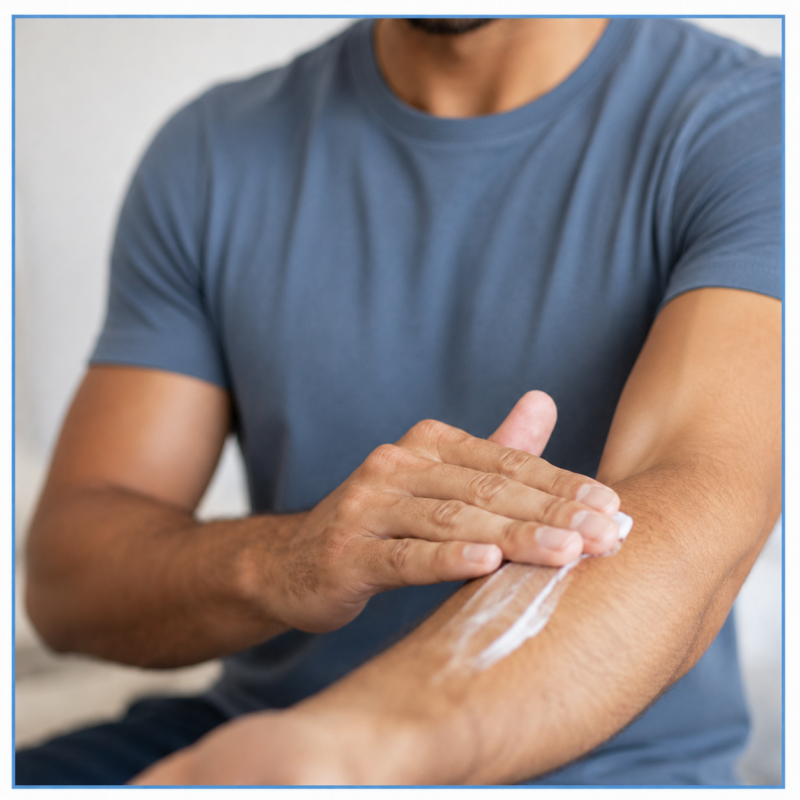
Press the pump according to your doctor’s instruction and dispense the cream onto the inner arm.
- Spread the cream thinly and evenly
Use the inner forearm from the opposite arm to gently spread the cream into a thin, even layer.
- Allow the cream to absorb
Avoid washing the area for at least 2 hours after application. This helps improve absorption.
Rotating the Application Site
It is recommended to rotate the application site weekly.
Applying the cream repeatedly on the same area may lead to skin saturation, which can affect absorption over time.
Other recommended application sites include:
- inner upper arms
- inner thighs
- shoulders
- lower abdomen
Important:
Never apply testosterone cream over the scrotum unless specifically instructed by your doctor.
Reducing the risk of Skin-to-Skin Transfer
One important precaution with testosterone cream is the possibility of skin-to-skin transfer. Testosterone remaining on the skin surface may be transferred to spouse or partner, children, and pets.
This is especially important for women and children, as accidental exposure may cause unwanted hormonal effects.
To reduce the risk of transfer:
- avoid close skin contact with female partners and children
- cover the application site with clothing
- application on the inner thigh and shoulders generally carries lower transfer risk compared to the inner arms or abdomen
- shower before anticipated close physical contact if needed
Common Side Effects to Watch For
Side effects are generally uncommon when testosterone cream is used according to doctor instruction and monitored properly.
Possible side effects may include:
- oily skin or acne
- increased body hair at the application site
- increased red blood cells
- prostate enlargement
Different individuals may respond differently to testosterone therapy. Regular symptom review and laboratory monitoring are important to ensure the treatment remains appropriate and safe.
Bottom line
Testosterone therapy should always be individualised. Proper application technique, regular monitoring, and ongoing medical guidance all play an important role in achieving good outcomes.
If you are unsure whether testosterone therapy is suitable for you, or if you have questions about how to use the treatment properly, it is best to consult a doctor trained in testosterone replacement therapy.